The Second Brain You Didn’t Know You Had
Craig Bramscher
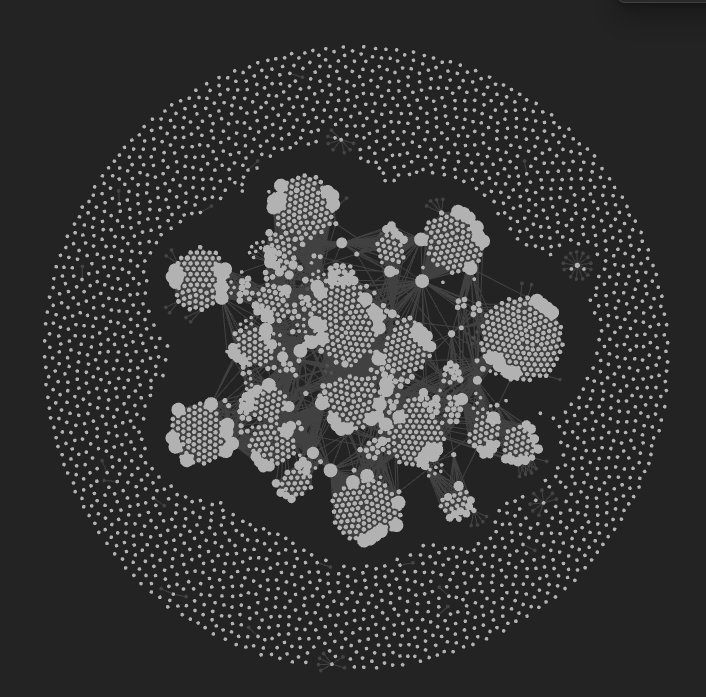
Over the last few weeks I exported roughly 3,600 conversations from the AI tools I’ve been using.
Ideas. Questions. Half-finished thoughts. Business strategies. Experiments. Dead ends. A few good insights buried in a lot of noise.
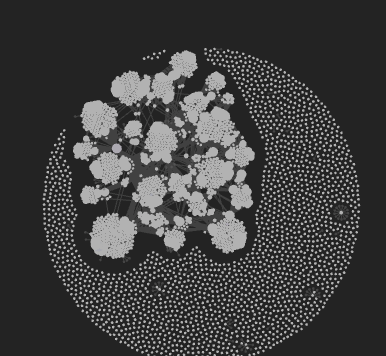
I pushed all of it into Obsidian and visualized the connections.
What came back surprised me.
Not because it was clean. Because it wasn’t.
It looked like a dense, organic network. Clusters forming around certain topics. Threads connecting ideas that I did not consciously link at the time. Entire areas of focus emerging simply because I had spent time there.
It did not look like notes.
It looked like a mind.
The Problem With How We Use AI Today
Most people treat AI like a session tool.
You open it. You ask a question. You get an answer. You move on.
Each interaction stands alone.
Nothing builds.
That is strange when you think about it. The real value of thinking has never been in a single answer. It comes from context that builds over time.
Your experience matters. Your history matters. The path you took to get somewhere matters.
Without that, every interaction starts from zero.
A Different Way to Think About It
What if instead of treating AI as a tool for answers, you treated it as a system that builds context?
Every question you ask. Every idea you explore. Every direction you abandon.
All of it becomes part of something larger.
Not just what you know. How you think.
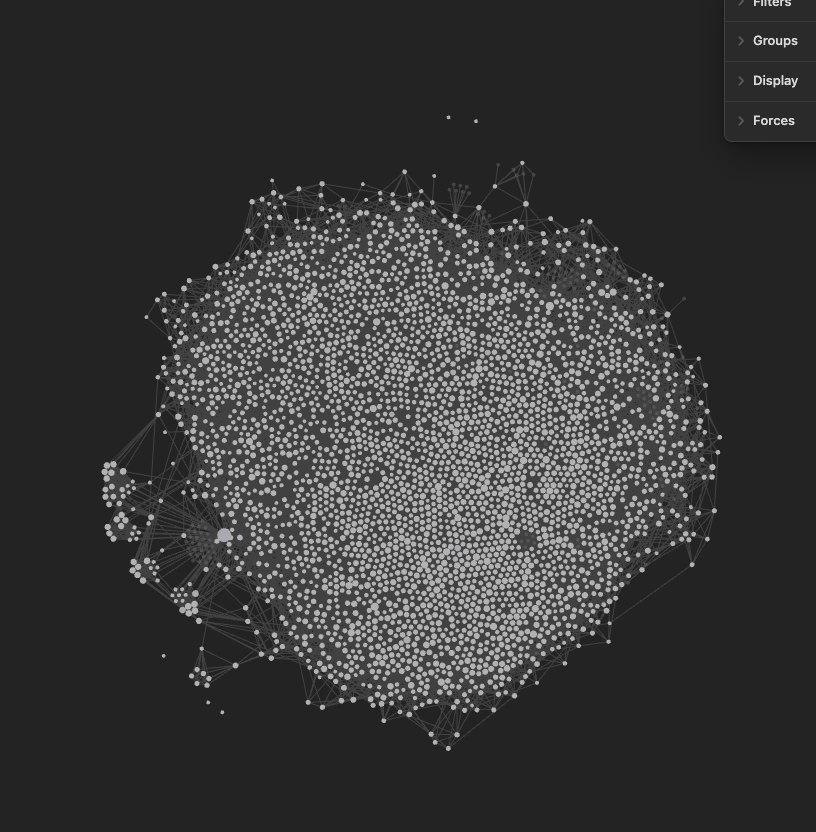
When you visualize it, you start to see patterns that are hard to notice in real time.
Certain topics cluster together. Some ideas keep coming back. Some areas expand while others fade.
It becomes clear where your attention actually goes, not just where you think it goes.
Memory as an Asset
We talk a lot about data as an asset in business.
Customer data. Market data. Operational data.
But personal context is rarely treated that way.
It should be.
Your own thinking history may be one of the most valuable datasets you have.
It captures your interests. Your priorities. Your decision patterns. Your biases. Your direction.
More importantly, it captures movement.
Where you started. What you explored. What you came back to.
From Stateless to Stateful Thinking
Most AI systems today are stateless.
They respond to the current prompt with limited memory of what came before.
When you bring your own history into the system, something changes.
The AI no longer operates in isolation. It operates with context.
Instead of answering a question, it can begin to understand what you have already considered. What you tend to focus on. What paths you have explored.
The interaction starts to feel less like search and more like continuity.
Seeing Your Thinking
The visualization was the most interesting part.
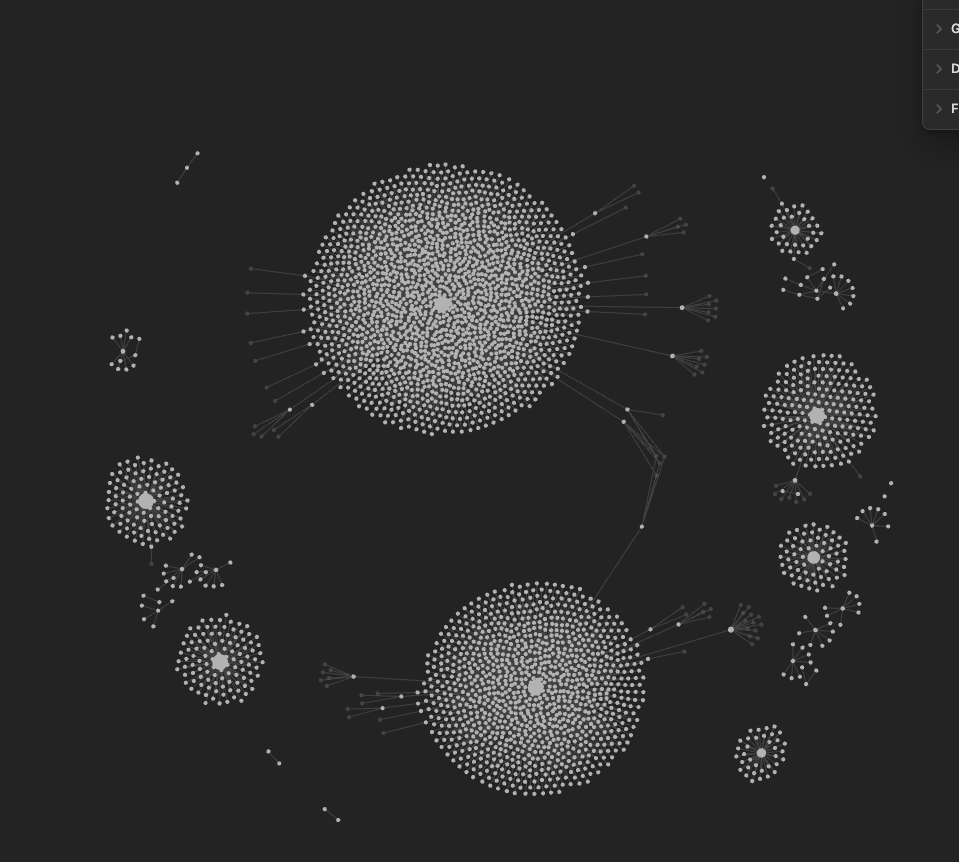
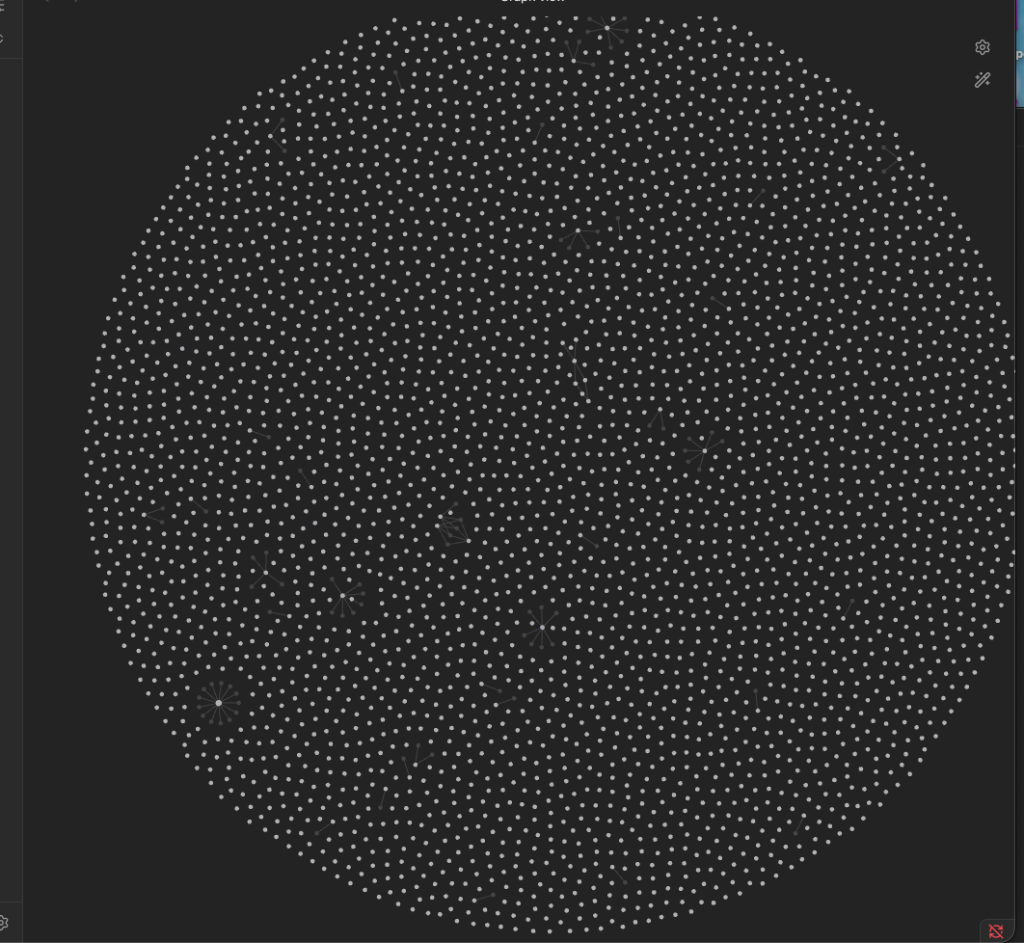
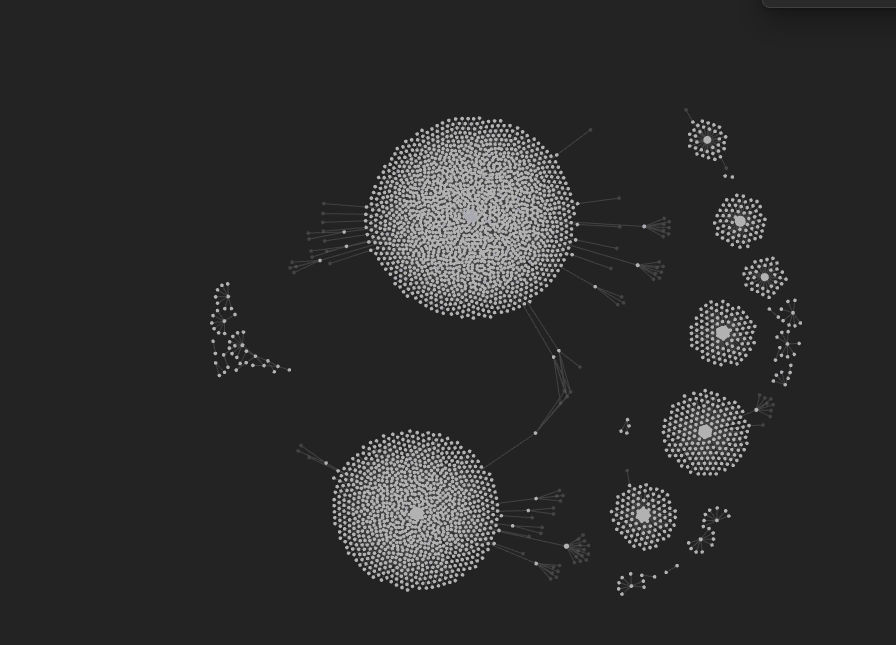
Thousands of interactions turned into a network.
Clusters formed naturally.
Some areas were dense. That is where most of my attention had gone. Others were thin or disconnected.
Some ideas I thought were important barely showed up.
Others I had not thought much about formed large clusters.
It is one thing to think you understand how you spend your time.
It is another to see it.
Where This Gets Interesting
Once you have this dataset, the value becomes obvious.
You can search your own thinking.
You can revisit ideas that were never fully developed.
You can connect ideas across time that were never connected in the moment.
You can ask better questions.
What keeps coming back?
Where did I spend the most time?
What did I abandon too early?
What patterns exist in how I make decisions?
Over time, this becomes more than a log.
It becomes a system for reflection.
A Practical Use Case
Imagine asking an AI:
Based on everything I have explored over the last year, what are the three directions I keep returning to?
Or:
What ideas did I spend the most time on but never execute?
Or even:
What patterns exist in how I evaluate opportunities?
These are not questions a stateless system can answer.
With context, they are straightforward.
The Real Opportunity
The opportunity is not just storing conversations.
It is building a system where your thinking compounds.
Where each interaction adds to something you can revisit and build on.
Where AI becomes less about answers and more about understanding.
Most people are already creating this data.
They just are not keeping it.
A Thought Going Forward
There is a quiet shift happening.
From tools that respond
to systems that remember
From isolated interactions
to continuous context
The question is not whether this will become useful.
The question is whether you start building it now.
Because over time, it may become one of the most valuable assets you have.
Not just a record of what you have done.
A map of how you think.
Originally published at bramscher.com.