Context Is King
Craig Bramscher

The internet needed content. AI needs to understand why yours matters.
Craig Bramscher · July 2026
I was fortunate enough to participate in the dot-com era, back when every company suddenly needed a website and very few of us knew exactly why. We were building things as quickly as we could, occasionally with a business model and frequently with the assumption that we would figure that part out later. It was exciting, chaotic, and fueled by enough optimism and available capital that some fairly questionable ideas survived much longer than they probably should have.
One of the rallying cries of that era was “content is king.” Bill Gates wrote those words in 1996, and the phrase became part of the language of the internet. The web had created what felt like an unlimited amount of digital real estate, but most of it was empty. Websites needed a reason for people to visit. Search engines needed pages to index. Companies needed articles, photographs, product descriptions, discussion boards, and eventually video.
Creating all of that content took time and money. If you could consistently produce something useful or entertaining, you had an advantage because content was still relatively scarce.
Nearly thirty years later, I think we may be watching that equation reverse.
Artificial intelligence can produce more content in an afternoon than most companies could have created in a year. It can write an article, generate the images, analyze the market, build the presentation, and create a reasonably good plan for distributing everything. It can also write the software needed to manage the project, which seems a little excessive, but I am not complaining.
Some of what it produces is still mediocre. Some of it confidently wanders off in the wrong direction. An increasing amount of it, however, is remarkably good.
The models will continue to improve, and we will continue arguing about which company has the best one. One model leads in coding for a while, another is better at writing, and a third scores well on a reasoning benchmark almost nobody had heard of six months earlier. By the time someone completes a thorough comparison, at least two of the companies have released something new and we begin the debate again.
For most of the work that most people need done, the competition is becoming very close. The major models are all capable of completing difficult tasks faster than a human can complete them, and often at a level that is more than good enough.
If access to intelligence becomes common, then access alone is no longer much of an advantage. The interesting question becomes what we give that intelligence to work with.
Content still matters, but I suspect context is becoming king.
Projects that never survived the math
What interests me most about AI is not simply that it can perform existing work faster. It is that projects I would have dismissed a few years ago are becoming achievable at a reasonable cost.
I have accumulated plenty of ideas throughout my career that never survived the basic math. The market might be too small to justify a development team. A customer might benefit from a service but never be able to afford the people required to deliver it. An idea might require a strategist, researcher, designer, programmer, analyst, and project manager before anyone could even determine whether it was worth pursuing.
I am also fairly good at coming up with ideas that are more interesting than practical, so the math has probably saved me from myself more than once.
That calculation is changing. A small business can now access capabilities that once required a large team. Someone with deep experience in an industry but little software knowledge can describe a problem and begin building a solution. A boutique agency’s collection of specialized skills can be made available to companies that could never justify boutique-agency prices.
This is part of what led us to Konmashi. We began with the idea of creating a social marketing team made up of specialized AI agents. Each agent would have a role, including strategy, writing, design, analysis, and community management. Together, they could bring the capabilities of an expensive boutique agency to smaller agencies or directly to companies that wanted to operate the system themselves.
Much of this is technically possible now. The models can perform the individual tasks. What became increasingly obvious as we worked on it was that performing a task and performing it for a particular company are very different things.
An AI can write a competent social post about property management in seconds. That does not mean it understands how High Desert Property Management thinks about owners, tenants, maintenance, risk, or the community it serves. It does not know which problems we take personally, which compromises we are willing to make, or which promises we refuse to break. It certainly does not know the thousand little decisions our employees make because experience tells them what feels right.
The AI knows an enormous amount about property management in general. What it lacks is an understanding of this property management company.
That gap is context.
More than a better prompt
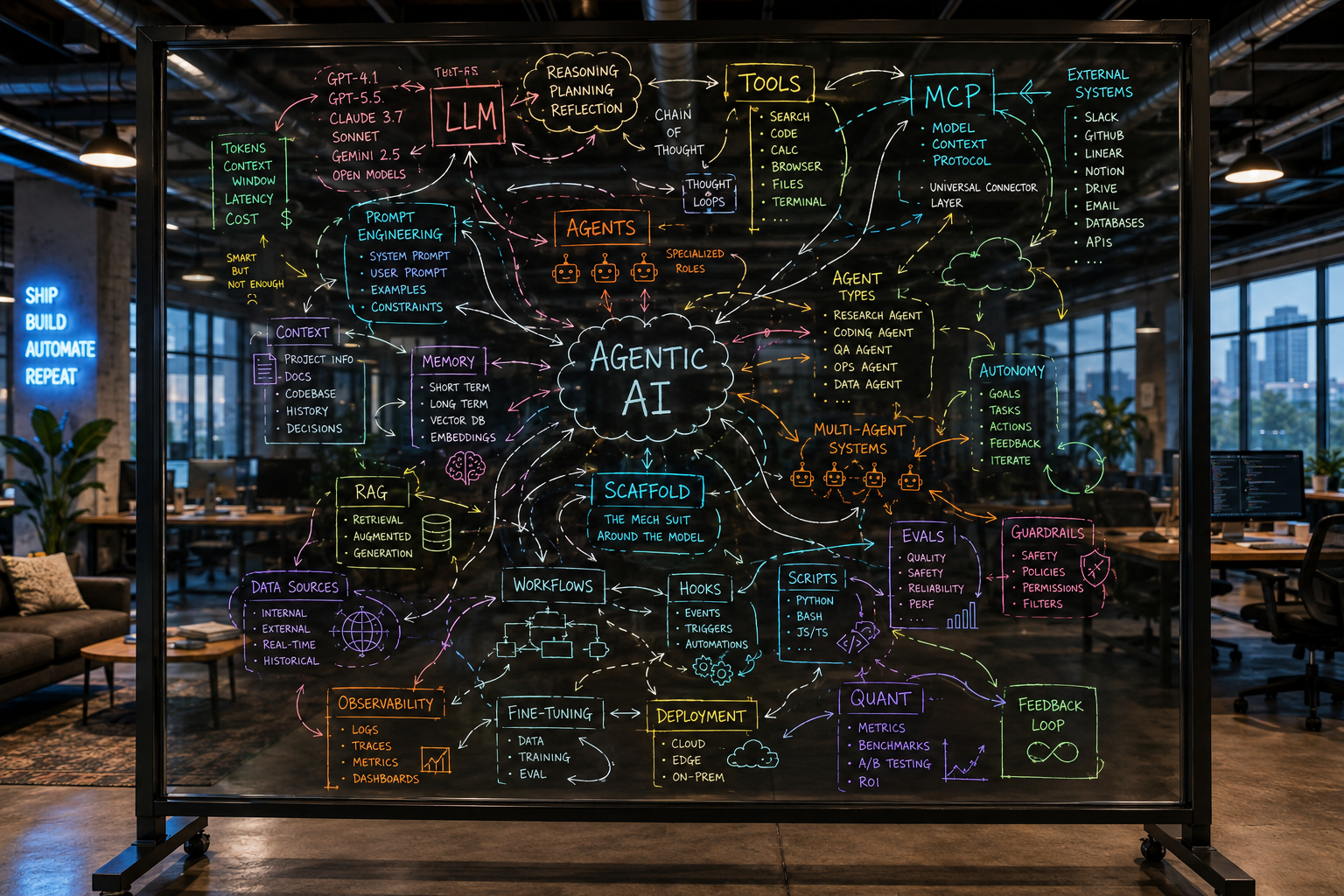
We spent the early years of generative AI talking about prompts. People traded elaborate prompt formulas and discovered that if they asked a model to act as an expert, think step by step, and take a deep breath before answering, it might produce a better result. Prompt engineering became a skill, although at times it felt like we were all trying to discover the correct incantation for a very intelligent but occasionally confused genie.
As the models improve, the exact incantation seems less important. They are getting better at understanding imperfect instructions, which is good news for those of us who tend to think out loud and change direction halfway through a sentence.
The broader context matters more.
Context includes the instructions we provide, but it also includes history, examples, goals, relationships, prior decisions, available tools, and an understanding of what success means. It helps answer the questions that are difficult to fit into a clever prompt. Who is asking? Why does this matter? What has already been tried? What does this person believe? How does this company make decisions? What should never be sacrificed just to make the numbers look better?
The models already have access to an extraordinary representation of human knowledge. Asking one to produce another article about leadership is not especially difficult. It has absorbed more leadership writing than any person could read in a lifetime, including quite a bit that probably did not need to be written in the first place.
What it does not have is our unique perspective.
It does not know which lessons we learned the hard way. It does not know which conventional wisdom we distrust or which mistakes permanently changed how we operate. It does not know about the customer conversation that bothered us for three days, the employee who quietly taught us how the business really worked, or the idea we abandoned ten years ago that suddenly makes sense today.
We are not going to contribute more general knowledge than the model already has. Our contribution is knowing what matters in a particular situation and why.
The personal second brain
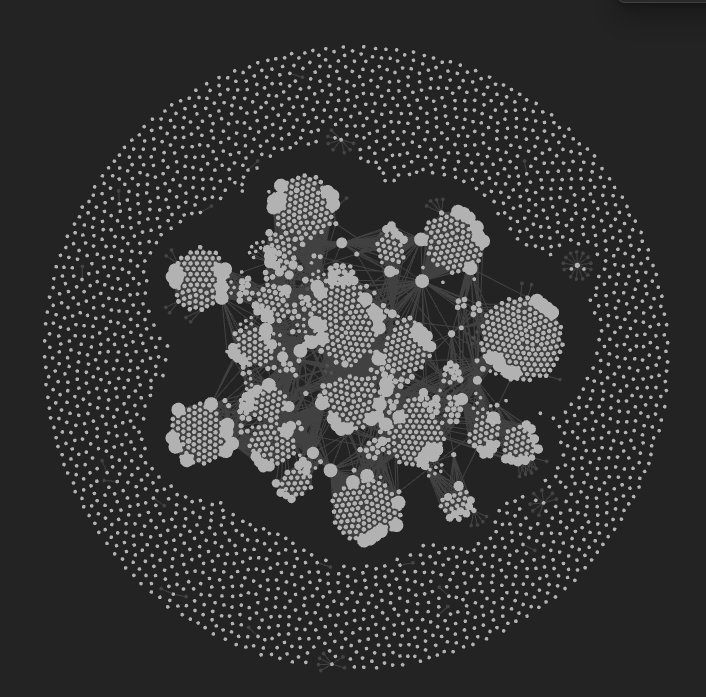
A few months ago, I exported roughly three and a half years of my ChatGPT conversations. There were thousands of them, including questions, experiments, technical detours, business plans, unfinished articles, and ideas that went nowhere. There were also a few ideas that probably deserved more attention than I gave them.
I imported everything into Obsidian, which organizes notes and helps reveal the connections among them. I expected the process might uncover some grand pattern in how I think. I pictured a beautiful map of my intellectual life appearing on the screen and confirming that all those late nights talking to machines had been part of a coherent master plan.
That is not quite what I found.
What surprised me most was how many things the system remembered that I had forgotten. It surfaced earlier ideas, found connections between conversations separated by years, and reminded me of questions that had once seemed important. Some of those conversations had become part of my thinking even though I no longer remembered where the ideas began. Others had disappeared completely until the system brought them back.
This is what I think of as a personal second brain. It contains the long-term knowledge, experiences, interests, lessons, and beliefs that make up an individual perspective. It is not intended to preserve every thought as permanent truth. People learn. We abandon old assumptions, become interested in new ideas, and occasionally discover that something we believed with great confidence was completely wrong.
A good personal second brain should preserve that evolution rather than continuously replacing the past with the newest version. Knowing that I changed my mind can be as valuable as knowing what I believe today. The history explains where the current perspective came from and may reveal a pattern that the current conclusion alone cannot.
This is different from the temporary information needed to get through a particular day. My calendar, current task list, unread messages, and the status of a project are useful context, but they are not my second brain. They are working memory. They change constantly and often lose their value once the task is complete.
The second brain is the more durable layer underneath that activity. It should change slowly as experience accumulates. It does not remain frozen, but it evolves with some memory of where it has been.
This distinction matters because saving information is not the same as creating knowledge. Dumping every email, meeting transcript, note, and document into an AI can create the digital equivalent of inviting someone into a warehouse and asking them to find the important box. The information may be in there, but that does not mean it will be found or understood at the right time.
A useful second brain needs judgment. It should preserve sources, distinguish a passing thought from a durable belief, and understand that the newest statement is not always the most important one. Its purpose is not to remember everything equally. Its purpose is to help us recover the right part of our history when it can improve what we are thinking about now.
The business has more than one brain
The personal second brain begins with an individual, but a company cannot simply borrow the founder’s brain and call that institutional knowledge. Founders have a habit of confusing those two things. I say that with the benefit of considerable personal experience.
A business contains several distinct bodies of long-term knowledge. They overlap with the personal second brains of the people involved, but they should not be treated as the same thing.
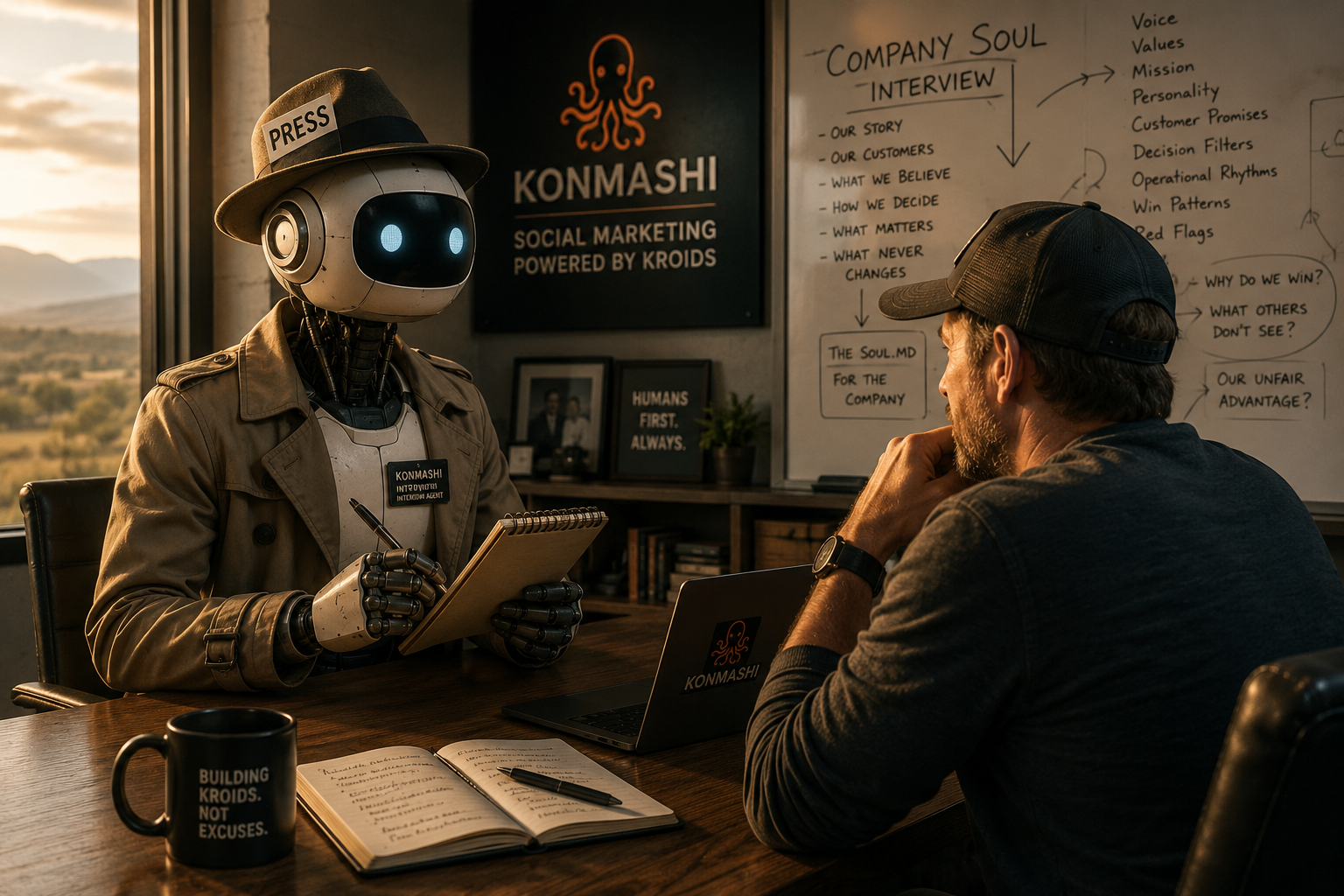
I wrote previously about the idea of a Company Soul. It would be easy to treat this as a manifesto or a file containing the company’s mission, values, and preferred writing style. Those things belong in it, but they are not enough.
The Company Soul is the durable knowledge of what the organization believes, how it makes important decisions, what it has learned, and where it hopes to go. It should capture the company’s purpose and operating principles, but it should also include examples of those principles being tested in real situations.
Like a personal second brain, the Company Soul should evolve. A company learns from success, failure, employees, competitors, and customers. It enters new markets, abandons old initiatives, and occasionally discovers that a cherished belief no longer matches reality. The Company Soul should preserve enough of that history to explain why the company changed rather than quietly rewriting the past every time leadership announces a new direction.
Many agents now ask us to give them a soul of their own. This is usually a document explaining the agent’s role, responsibilities, personality, and boundaries. That makes sense because a strategist should approach the business differently from a customer service agent, and a writer needs different examples and tools than an analyst.
Those individual agent souls should inherit from the Company Soul. They can then add the knowledge, responsibilities, and constraints specific to their roles. Otherwise, we risk creating a group of individually capable agents that have very different ideas about the organization they represent. Human teams already struggle with this. There is no need to reproduce the problem at machine speed.
The team also develops a brain of its own. This is the long-term knowledge of how people work together, where responsibilities actually sit, how handoffs happen, what has been tried, and which informal practices keep the organization functioning. Much of this knowledge never reaches an employee handbook. It lives in stories, habits, shared language, and lessons learned during difficult projects.
The team brain should not be confused with the team’s current workload. Today’s assignments, deadlines, project status, and meeting notes are working context. They help the team operate now. The team brain contains the patterns and lessons that remain useful after the current project ends.
There is also a customer brain. This is not a profile of an imaginary ideal customer assembled during a marketing retreat. It is the accumulated understanding of what customers value, fear, misunderstand, request, reject, and ultimately pay for.
The customer brain grows from sales conversations, support requests, reviews, renewals, lost accounts, product usage, and the language customers use before someone from marketing cleans it up. Individual interactions may be temporary, but the patterns that emerge across them become durable knowledge.
These business brains are related, but they are not interchangeable. The founder’s personal perspective may influence the Company Soul, but it should not define it entirely. The team may understand operational reality better than leadership does. Customers may value something the company barely recognizes as important.
The disagreements among these brains may be more useful than their similarities. If the Company Soul says customer service is the highest priority while the team brain shows that employees are rewarded primarily for speed, the contradiction matters. If the company believes customers stay because of its technology while customer history shows they stay because one employee always answers the phone, that matters too.
Context should not exist merely to make the AI agree with us more effectively. It should help the AI notice where our different versions of reality no longer line up.
Durable memory and working context
I have started to think of context as having two basic layers.
The first is durable memory. This includes the personal second brain, the Company Soul, the team brain, and the customer brain. It contains knowledge that remains useful across many decisions and projects. It changes gradually as people and organizations learn.
The second is working context. This includes the immediate goal, current project, recent messages, available tools, deadlines, permissions, and the specific role we want the AI to play. It changes from one task to the next.
An AI needs both.
Durable memory without working context may understand the company but not know what needs to be done today. Working context without durable memory may complete the task but miss why the task matters or how the company would approach it.
The challenge is not putting all available information into every prompt. The challenge is drawing the right durable knowledge into the current working context. A customer service agent may need a small part of the Company Soul, relevant customer history, the current support request, and clear authority to act. A marketing strategist may need a different combination. Giving both agents everything the company has ever recorded would probably make them less useful rather than more informed.
This is where context management becomes more interesting than prompt engineering. The system must know which brain to consult, what knowledge to retrieve, how much history to include, and when fresh operational information should become part of long-term memory.
Not every meeting deserves to become institutional knowledge. Not every customer complaint represents a trend. Not every late-night founder idea should redirect the company, a rule that several people I work with may eventually insist we formalize.
The system needs a way to learn without reacting permanently to every new piece of information.
What belongs to us
During the dot-com era, companies rushed to create content because the internet gave them a new place to be seen. The companies that did it well learned how to publish consistently, attract an audience, and eventually personalize what that audience received.
In the AI era, nearly everyone will be able to generate content. Most companies will have access to models that can research, write, analyze, design, and build. The choice of model will still matter for certain tasks, but I doubt it will be the durable advantage many people expect.
The harder work will be developing the context around those models. We will need to decide what belongs in durable memory, what is temporary working context, where the knowledge came from, and when it should evolve. We will also need to decide what role we want the AI to play. Sometimes we will want an expert, sometimes an interviewer, sometimes a critic, and occasionally someone willing to point out that the founder’s brilliant new idea looks remarkably similar to the one that failed three years ago.
I am still trying to understand what the best version of this looks like. The personal second brain is part of it, but it belongs to the person. The Company Soul belongs to the organization. The team and customer brains preserve different kinds of business knowledge. They should inform one another without being collapsed into a single pile of information.
What seems increasingly clear is that the model companies cannot provide any of this for us. They can provide the intelligence, but they cannot provide our history, our relationships, or the perspective we earned by making mistakes they never had to make.
The internet gave us access to more content than we could consume. AI is giving us access to more intelligence than we know how to use. Our next challenge is not producing more of either one.
It is building the memory and context that help intelligence understand what matters to us, our companies, our teams, and our customers.
Content was king for the internet.
I think context may be king for what comes next.
Craig
Originally published at bramscher.com.